Whatever you are training for, it starts here.
Lodestar builds your programme around the goal you actually have, and then measures you honestly while you chase it.
Tell it what you are training for in your own words. A sport. A race. Getting your first pull-up. Losing fat without losing the strength you have. Coming back from an injury. Lodestar works out what that goal demands, looks at where you are today, and writes the training from both.
It starts with your goal, not a template
Before writing anyone a programme, a strength and conditioning coach performs a needs analysis: work out what the goal actually demands, assess the person in front of them, then programme against both. Almost no app does this. Lodestar does.
A tennis player gets rotational power, single-leg strength and shoulder prehab, and no heavy legs the day before a match. Somebody training for fat loss keeps the heavy compound work that protects their muscle, and is scored on the things they can actually move. Somebody rehabilitating a knee gets loading that respects it. Same app, genuinely different programmes, because the goals are genuinely different.
It adapts as you go. Tell it you feel beaten up and today comes down. Miss three weeks and it brings you back in rather than pretending you never left. Change your mind about the goal and the whole plan follows, with no waiting period and nothing to unlock.
Every lift has a page, and the page tells you the truth
Open a lift and you get the whole of it: what you have done on it, where that puts you, and what the next rung would cost. The estimate is a range rather than a number, and it says where the range came from and what would narrow it.
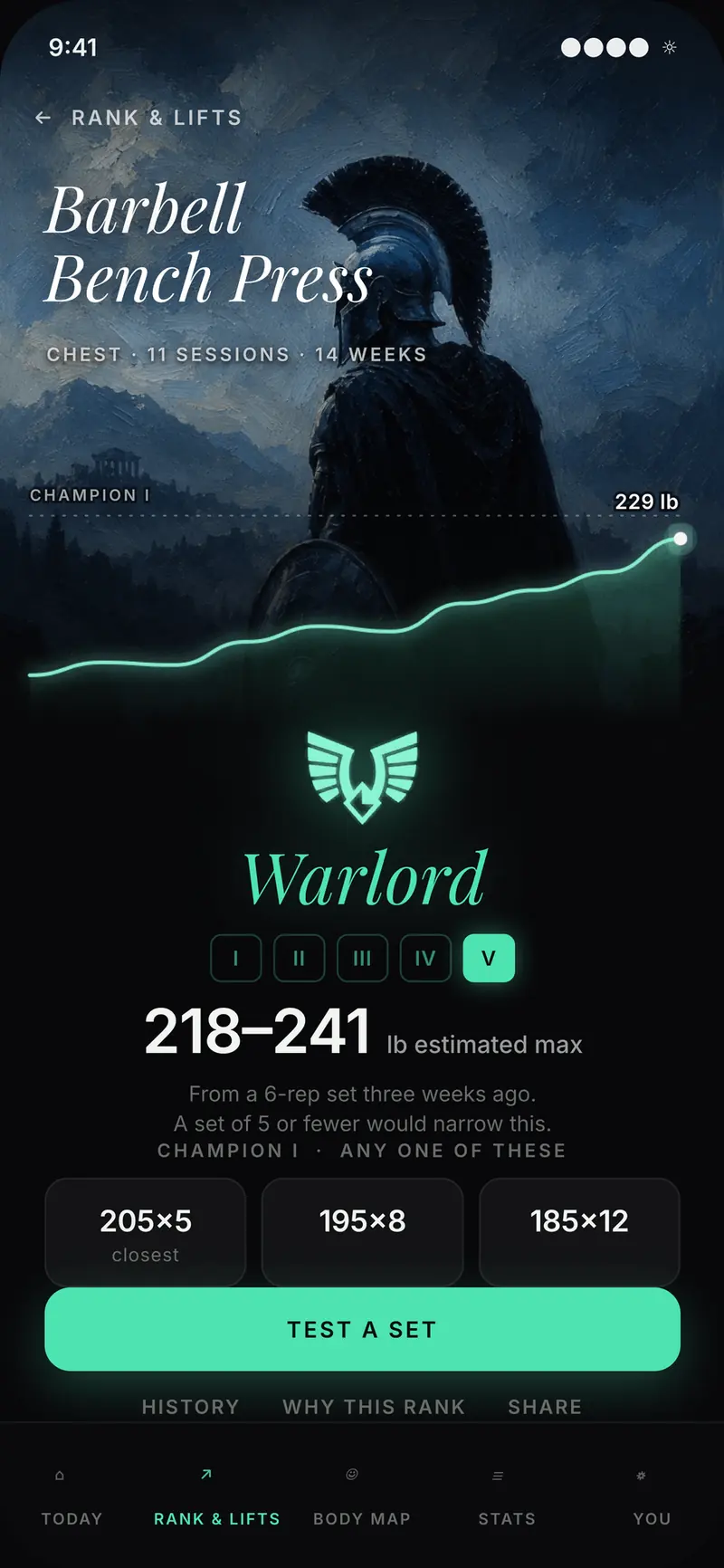
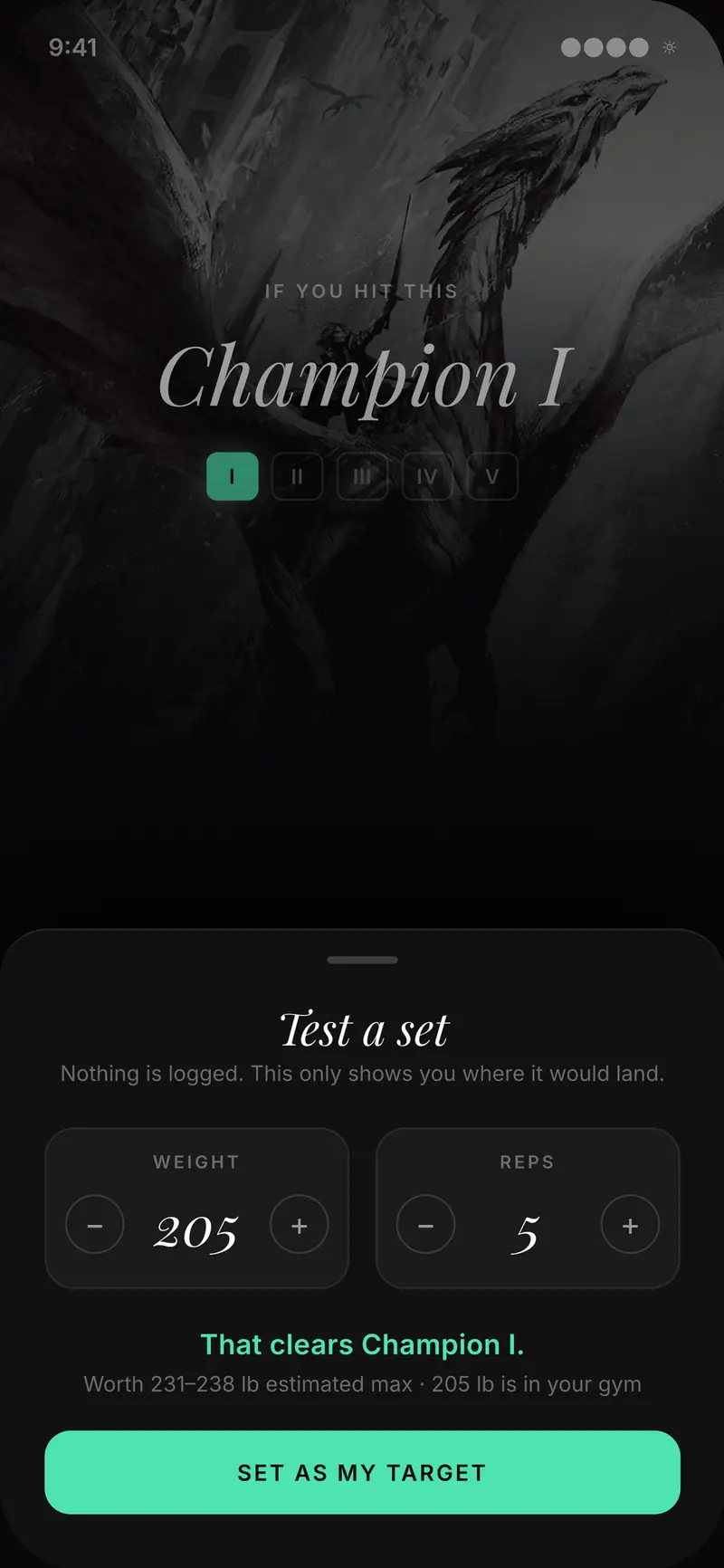
And you can ask before you lift. Dial in a weight and a rep count and the app tells you where that set would land, what it would be worth, and whether the weight is even in your gym. Nothing is logged and nothing is promised; it only shows you the answer.
A rank that means something
Lodestar measures strength against published absolute standards. There are 226 of them in the app, and each one is stored with the citation it came from. Your position is scored against those numbers, not against the other people using the app.
That distinction matters more than it sounds. A rank scored against a user base drifts as the user base changes, and it tends to rise if you simply show up often enough. A rank scored against a fixed standard only moves when you actually get better, and it means the same thing in ten years as it does today.
It will not flatter you
Estimated one-rep maxes are shown as ranges, because a single number would be a false precision. Heart-rate zones are labelled approximate, because they are. Where no credible published standard exists for a movement, the app says the lift is not ranked yet rather than inventing a tier for it.
And the measurement goes down as well as up. Edit your history downward and your rank follows it. A number that can only rise is not a measurement, it is a reward, and there are enough of those already.
How the ladder, the three pillars and the standards actually work
Product status
Lodestar is in development and is not yet available on the App Store. This site describes the product as it is being built. If you have a question about it, get in touch.